Introduction
I was recently reminded of the fact that a mantis shrimp might see a sunset that is far richer than the one we see, beyond the purples, oranges, and pinks familiar to human eyes.
And that thought sent me into a spiral of realisations.
What if the world is already more complex, more layered, more beautiful than we are capable of perceiving?
Let me explain.
Understanding What We See
Humans have three types of cone cells in our eyes, each sensitive to different wavelengths of light. These allow us to perceive what we call colour—millions of variations constructed from these three channels. Even something as subdued as beige or as vibrant as violet exists within the limits of what our biology allows us to see.
Now take it one step down.
Dogs and tigers, for instance, have only two types of cone cells. Dogs primarily perceive blues and yellows, while big cats like tigers see within a more limited blue-green spectrum. Their world is not colourless—but it is different, constrained in ways ours is not.
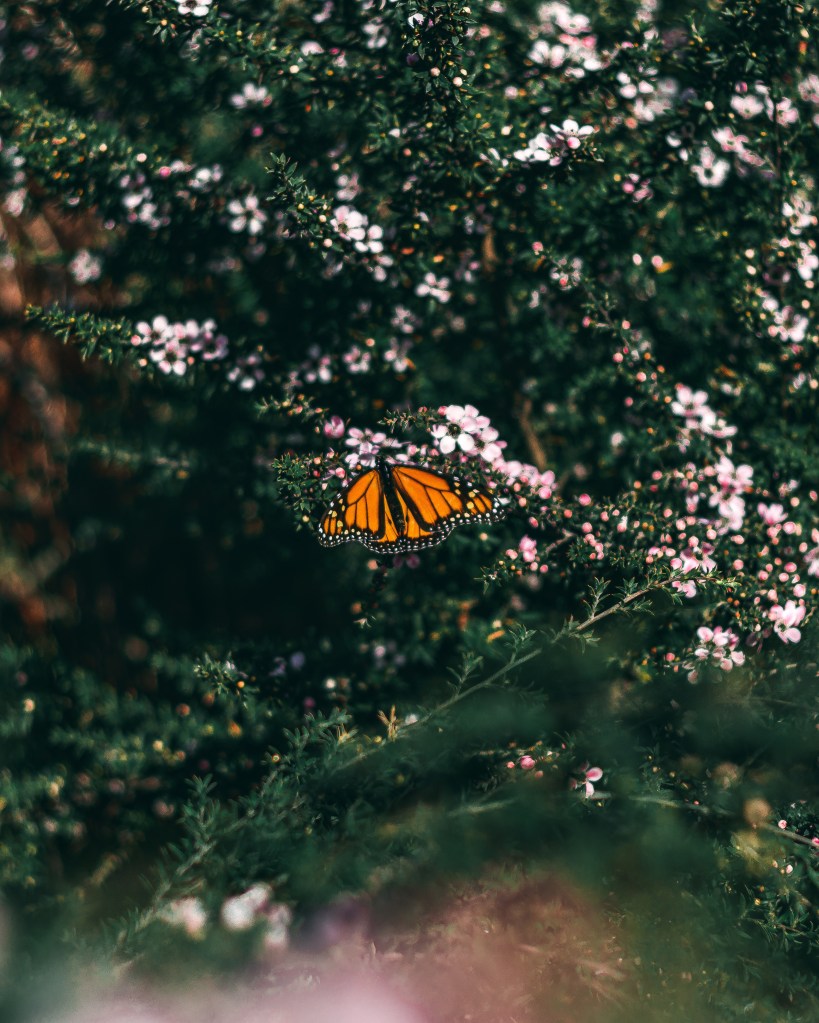
And then, there are butterflies. Many butterflies have four to six types of cone cells, and some can detect ultraviolet light. That means they perceive dimensions of colour that are completely inaccessible to us. I can simulate what a dog might see by filtering colours.
But here is where things get interesting.
While I can simulate what dog or tiger vision might look like, I will never truly understand butterfly vision. Not because I lack imagination, but because my biology does not allow me to perceive anything beyond the red, green, and blue framework.
This is where the idea of qualia comes in.
In Philosophy of Mind (a branch of philosophy concerned with the nature of the mind, mental states, and consciousness), qualia refers to the subjective experience of perception. It is not just about seeing a colour, but about what it feels like to see that colour. It is the difference between knowing that light has a certain wavelength and actually experiencing that wavelength as “blue” or “red”.
Scientists can describe exactly how a butterfly detects ultraviolet light. They can map the receptors, the signals, and the responses. But description is not the same as experience.
I can learn everything about how a butterfly sees the world. I can study the wavelengths it detects, the ultraviolet patterns it follows, and the way its brain processes colour.
But will I ever know what it feels like to see as a butterfly does?
As long as I am human, I am bound to human experience. My limitation is not just in knowledge, but in perception itself.
And that is what unsettled me.
If there are colours in this world that I can never perceive, then there may be aspects of reality that I am not just unaware of, but fundamentally unequipped to experience.
And that led me to think about heaven.
There is a verse in 1 Corinthians that speaks of a reality beyond what we can currently comprehend:
And then I wondered, why stop at colour?
What about music? Will heaven have notes beyond the scales we know?
What about language? Will there be words beyond anything we are able to form now?
These are things that sit just beyond the edge of my imagination.
Reflection and Wonder
As I sit back and think about this, I am reminded of the song I Can Only Imagine by MercyMe:
“Surrounded by your glory, what will my heart sing?
Will I dance for you Jesus, or in awe of you be still?
Will I stand in your presence, or to my knees will I fall?
Will I sing hallelujah, will I be able to speak it all?”
Heaven will be many things. But I believe it will also be a place where our capacity to experience reality is made complete. Not just more knowledge, but fuller perception. Maybe then I will finally see colours I was never created to see here. Until then, I can only imagine. 🙂
Post Reading Notes (Similar Reads):
Thank you for taking the time to read the first part of my Worshipping Through Wonder Series.
- If you would like to read more about reflections on heaven, you can read my blog titled Will there be Math in Heaven?
- For another piece reflecting on the architecture of my home parish and how it draws me into awe-filled worship, you may enjoy Stained Glass at the Altar.
- For more science (nature, evolution, biology, creation care) mingled with theology content please check out BioLogos. They are a page that continue to inspire people like me and remind me of the fact that we are created as responsible image bearers.
Image Credits:
All images used are licensed and sourced from Magnific.


Leave a Reply