Religion is like food. But whether you want to use it to feed your neighbour or shove it down their throat is upto you.
Hello! Thank you so much for traveling with me in my journey of the Disentangling my Faith series. Were you able to pause for a bit and introspect on the two questions I posed earlier? Or let me remind you. One was how does an athlete cope when they lose a limb? I’m sure you already remember the second question. Were you able to come up with answers for the same? If so, please take the opportunity to pause and converse with me on the same. 🙂
Before I proceed any further, I would like to remind you that this series is not a prescription to faith but rather a description of my personal journey. I hope you are able to read it keeping the same in mind.
No but seriously, how DOES one cope with the same? Does their identity crumble with them? How do they live with the fact that they can’t go back on the field? Ouch!
4. The Embrace
With everything that was happening around me so quickly and so unexpectedly, I started spiraling into a combination of PTSD along with the identity crisis of my faith. Like I mentioned before, it felt like I was spiraling and spiraling and there was no bottom to it. In the depths of my spiraling, I encountered something unexpected—a space where I could rest, unburdened by the questions that haunted me. I looked straight into it and it looked straight back at me and realized that never in my 21 years of existence could I imagine my life to finally turn out this way. But it did. And I let it embrace me. And I embraced it back. It was atheism, and for the first time, I felt like I could breathe.
It was comforting for me because it allowed me to breathe between the painful sessions that caused me to spiral. It numbed me from the otherwise hurting moments. It was comforting for me because I did not have to have an answer for the whys and hows about the questionable lifestyles of so many religious people. Atheism gave me permission to pause—to stop wrestling with answers and simply exist in the unknown. It freed me from the weight of needing to reconcile others’ actions with a deity I struggled to understand. And in that isolation was my solace. It gave me room to heal.
But it also came with the insecurity of still not knowing who I was. Who was Sharon if she was everything else, minus a Christian? (There are tears in my eyes as I answer this)
1. She is still loved: Still capable of experiencing love from members of her family and her close friends.
2. She is still worthy of experiencing joy.
3. She also experiences grief, maybe a little more than usual, but that is okay.
4. She is cherished: My father cuddling me in his arms and kissing me made me realize that love is never earned, love is never deserved, but it is still love.
At the Threshold
I realized I am human and still worthy of human connection. And somewhere along those lines, when I felt I had enough space, I had enough room, I was ready to re-navigate my past beliefs – fully embracing the roller coaster of emotions it would come with.
Hello! I’m so glad that you’ve invested yourself in the journey I’m trying to share. This piece of writing is something I wrote in my first year of college as a means of venting out how my faith (or lack thereof) felt to me. I have kept it as unedited as possible so that you understand the emotions I was going through. I never planned to blog about it ever, but with the series going on, I felt this might offer a better explanation, especially about the food poisoning. I would like to consider this the extension of Disentangling my Faith- Part 2: The Food Poisoning.
These are the words from my journal on 5th December 2018. It’s unedited, it’s raw. And it’s from the eyes of an eighteen-year-old who is grappling with the fact that her rose-tinted bubble just burst!
I don’t even know where to begin to explain all that has happened. I can’t even begin to express in words, perhaps even the words I write will not be able to hold all the struggle, even those words will not fully convey how broken I am and how I have fallen in faith. It was only a few months ago that I realized that I had come across a God of transactions. A God that will give if you are good enough, kind enough if you have followed every command if you don’t have sex until you’re married. I started to realize that my faith didn’t rely on my wants but submitted to the will of God started to deteriorate to getting whatever I thought was the will of God – so much so that when I didn’t get it, I started to question the God I believed in. I started to question the scriptures they quoted. I started to think that these characters were all madmen. I started to doubt the authenticity of the Bible, given I was already aware of translational errors.
At the same time, I dearly believed in the God my parents believed in. I felt a Presence when they prayed for me, I felt a Presence when I prayed for them. In fact, I felt closer to them when I prayed for them more than anything like it was the binding element among us. So I kept shifting between almost-not-believing-in-the-Divine to passionately-being-in-intimacy-with-the-Divine. I felt a sense of urge to yell it all out, to question people around if this was just me. I wanted to know if anyone else went through the same, inside their head. Yet, I had no one. I had so many dear to me that I had met in the past five months and yet no one I was comfortable enough to open up to.
One day, it finally hit me like a wave as I was lying down on my bed and listening to music. I could feel myself finally calm, finally relaxing and then I knew I wanted to cry. So I did. I poured out my emotions through my hysterical crying and yet constantly covered my mouth to muffle my sobbing – my roommates couldn’t know, I was too tired to explain. I kept crying and crying and then I stopped and listened to some more music and cried some more. This continued for some more time until I decided to sleep – at 1 am. But that day I felt more lighter and fresher than I would had I slept 2 hours earlier. It was a relief to cry and not say words, but crying didn’t suffice everything.
Coming back to the struggle, I thought I was almost advancing towards atheism. But I couldn’t possibly not believe in a Creator at all. I couldn’t possibly believe that my DNA didn’t have a Supernatural Force behind it. I couldn’t possibly believe that nothing created something as majestic as the stars or something as delicate as the flowers or that we just got lucky. No, I believed in answers. I believed there was a certain force that created you and me.
But I couldn’t believe in the God they believed and at the same time, I believed in the God they believed. I believed in incarnation, crucifixion, resurrection, salvation, and the Second Coming, but I did not believe in demanding from God for my problems to be solved. I did not believe in instant solutions that would solve all my problems always.
As a result, I noticed, my patience declined. I stopped waiting upon the Lord and started demanding for what I wished. And I wished and I declared and I proclaimed but in vain and I was shattered. I was told to expect good to happen to me always and that the belief in Jesus meant for a smooth trouble-free life until I dug deeper and realised that these were all teachings related to something called the ‘Prosperity Gospel’.
However, looking back into many many years ago, I remember being a victim of something else nicknamed as the ‘Poverty Gospel’, not very popular by name but still prevalent among certain communities, especially on how Christians view full-time ministry.
I remember how my parents were almost crushed by the poverty gospel by members of our own church. I remember how we couldn’t show much of what we had or the places we went to even if it was from their hard-earned money or simply gifted. There had to be no room for doubt. I remember being questioned on something as silly as the number of fancy cups and mugs, on our shelf ( most of which were gifted) or why my dad had a laptop despite having a desktop computer at home. It wore off though as we grew with time. It was almost the same time when I started to embrace the fact that my parents did Christian work for a living that I had emotionally detached myself from my own denomination. I would like to think of it as more than a coincidence. It was from realizing that I didn’t belong to this place to discovering that home was a far-off place, almost an ecstasy, a delight – a far-off place and yet a place that existed.
And here in this college, there were so many things that were similar to home – the inclusivity, for example, where anyone and everyone could join in worship, the freedom to express, where you could cry, move, raise your hand, or just sit. But the more I found this resembled home the more I realized how they preached the exact same things I couldn’t agree with and that shattered me. Because my heart wanted to believe that this was also home, that my own church could not stop me from believing this but my mind knew that my only home would be in the organization my parents were part of. In the place where there were others just like me. No masks, no fears, just be.
I occasionally sit on the park bench on the lawns, stargazing, hoping to find the God I believe in in the expanse of the universe. If only the God I believed in was a puppet or a genie who would do anything I wanted. But to boil down the Creator of the still expanding universe to a level so diminishing would be a ruckus not only to the idea of a Force behind everything created but also to the fundamental belief in the Sovereignty and Supremacy of the Divine. Wouldn’t it be a shame then, to believe in a God that can be so pathetically controlling? My heart races with rage to even write this but like I mentioned, even my words would not be able to hold up to all my struggles, even these pages cannot fully hold what my heart has been weighed with. My only consolation is that the place that feels like home is not far away. My only consolation is that there is still a place where I belong.
Religion is like food. But whether you use it to feed a man or shove it down their throat is your choice.
3. Who was Sharon?
With all the noise that was surrounding me, I slowly started to break away from anything associated with the Christian religion or Christian faith. Anything could trigger me. I would throw tantrums or have an emotional outburst if I even heard the word “Jesus”. How could this Jesus let such religious scandals go free, go unnoticed? How could this Jesus not care? Does he have no concern for people hurting? I was angry. I was sad. But I was mostly exhausted.
My thoughts exhausted me. I felt nauseous. I couldn’t take it anymore. I was spiralling endlessly. But in the midst of dissociating came a whole other baggage – I started facing an identity crisis.
For the longest time, no matter what, I knew I was definitely a Christian. One could always debate on other aspects of my identity like whether I am truly a Malayalee or, sometimes, even truly a Marthomite, but I could never think of anyone questioning the credibility of my faith. I was close to a perfect kid. We went to church every Sunday. I was a good Sunday school student. I always involved myself in any church activity I could. I could give impromptu sermons. I could quote a good amount of Bible verses. And I took a certain amount of pride in the fact that for my parents, it was more important that we WENT to church every Sunday over WHICH church we attended that Sunday. And I never hesitated to show it off.
And just like that, it all seemed to start to come crumbling down. I couldn’t be any of that. It seemed very confusing to me. And the deeper I dug, the more confused I was. I had all sorts of questions. Who am I? What happens after I die? What am I supposed to do while I am here though? Is life meaningless?
Looking back, I realise these were signs of post-trauma. Much like food poisoning.
But then I had other questions.
Who was Sharon if she was not a Christian? Wait, but what do you mean not a Christian? Okay, start small. Who was Sharon if she couldn’t even pray for 30 seconds? If she couldn’t read her Bible without another emotional outburst session? Who was Sharon if she constantly dissociated every time someone brought up faith? If she could not sit calmly for a Bible study? If she could no longer recite the Nicene Creed?
After all, who was an athlete after when they lost a limb? A homemaker, when their child left?
Who/what fills the void of the life they unknowingly built and based their entire identity, status and self-worth on?
Looking back, I also realize I wasn’t just dealing with post-trauma. I was trying to make sense of the person I was and the person I am.
I was no longer, by any means, sitting at the table. The table where I was loved, fed and laughed along with the rest of my loved ones was no longer a memory I wanted to have.
My brain and my body started to see these memories as harmful. I could no longer see them as genuine moments of love, even if they were.
It may be obvious to you by now, but it wasn’t very obvious to me back then. I wasn’t just dealing with post-trauma. I was dealing with an identity crisis.
What was happening to me? I was restless, I was lonely, but most of all I was very very scared.
I was scared about the uncertainty this carried. Because, right until then, I thought that every question I raised would have an answer. But even if there were a few answers, there was no answer that satisfied me. The uncertainty held onto me and I felt like I was falling into a bottomless chasm.
Religion is like food. But whether you want to use it to feed your neighbour or shove it down their throat is upto you.
Hello there! If you reached here you’ve probably read my previous blog on my upbringing and how faith played a role into my formative years. It definitely has given me some of my best memories and a sense of community. But in this particular blog, I’m going to talk about where it all started to go bleak. Or in other words, how my rose-tinted glasses about the Christian faith, belief and community fell off.
2. The Food Poisoning
I’m not sure if it was because of my age (the whole adulting experience), or because of the college I went to. Perhaps both factors contributed to it. So I’ll tell you how it went.
I went to a conservative Christian college where a lot of the fundamentals of my faith started falling apart. I wasn’t very particular about going to a Christian college, but since it was one of the few colleges that had the course I wanted to study and it was relatively closer to home, I ended up taking admission. There were a lot of surprising aspects of my Christian college that definitely made me raise my eyebrow every now and then.
For example, the college prospectus states that people from different religions weren’t allowed to publicly practise their faith. I found that weird, even as a practising Christian who grew up very Christian and was admitted into a Christian college.
I noticed how people made very clear distinctions between their academic life and their spiritual life, thinking that one was more holy than the other. I noticed how the general morning assembly, which had people of all faiths sit together, was filled with messages that were unwelcoming to people who were not part of the faith (the assembly was compulsory and your attendance was marked, so you really didn’t have a choice on not attending). I noticed how, for many people, activities like planning and preparing for an exam were signs of a “weak believer” or “lukewarm Christian”. You didn’t have to worry too much about it. It’s in God’s hands.
Although I do believe that the Bible tells us to not be too anxious and also to cast our burdens onto Jesus, I also believe that Jesus does not promise us a life free of hard-work. Being someone who was very fascinated about the subjects I studied (I mean, there were some subjects I couldn’t wrap my head around but, in general, I probably the happiest in my academic journey, because this was exactly what sparked my interest), I found it hard to digest that a lot of people used spirituality to justify academic incompetence. Don’t get me wrong, I believe that how much you choose to study and how much you aim to score are very personal choices that one needs to make, the spiritual justification was what I found absurd. And this was not just academics, I found samples of this school of thought in almost every thing people did. And it seriously gave me the icks.
Don’t get me wrong. I do believe in the grace of God. Grace, of course, covers us all. But when it starts becoming a repetetive expectation, or a transactional one, I don’t think it can be called grace anymore. The Christian life is not a bed of roses where you treat God like a genie or a puppet. This was what I knew. And the more I saw my faith being mis-represented, the more my aversion towards the Christian faith started to grow.
You know sometimes when a friend would make a parody of a song in a regional langauge and it is so funny but also so bad that you jokingly wish you didn’t understand the regional language cause it hurts your ears? Like, I really wish I didn’t understand this language so I wouldn’t have to deal with how bad the humour is?
That was me, but on a serious note. I wished I wasn’t a Christian so I didn’t have to deal with all the twisted ways it was represented.
And then came the overdose of religion. I started to feel numb. I was getting oversaturated.
Very gradually, my faith and belief was hanging by a thread.
And one day, it snapped.
I did not want to be associated with the people claiming to be men of God.
Religion is like food. But whether you want to use it to feed your neighbour or shove it down their throat is upto you.
Hello there! Welcome to a new blog series of mine titled “Disentangling my Faith”. Over here is my attempt to address my journey of faith, growing up in a Christian household, especially being born to parents who wanted to serve the Lord full time. I had my own set of unique experiences of interacting and familiarizing myself to aspects of the Christian faith. My faith was also very deeply tied to my very being, my identity. And most of you would reply saying, “Wow. That must’ve been very good”, and you’re mostly right. But how much is too much?
How do athletes cope with an identity crisis when they lose a limb? How do homemakers who catered to every need of their child, find their worth when their child leaves for college?
Keep thinking about these two questions. I do not have exact answers for them either. But these analogies give me a better idea of how my identity, confidence and self-worth were deeply affected during the years I found myself not wanting to associate with anything of my faith, struggling keep-up with the reputation of “The Good Christian Girl”.
Okay, enough talking. let’s begin.
1. Lovingly Fed and Overfed
For the initial 18 years of my life, I was that almost perfect Christian kid one would look upto. The one who could spontaneously shoot Bible verses by heart (sometimes even with the reference on point), who would stir up impromptu elocution scripts, who regularly studied books of the Bible for quiz competitions and turn anything into a debate topic. To add to that, I was a voracious reader while I was in school. So by the time I was a teenager, I had a good enough collection of Christian and theological books for my own personal spiritual journey. I asked a lot of questions. To my dad, to my Sunday school teachers, and to my church clergy. I remember the time when I was attending my first Holy Communion classes in 7th grade and was trying to understand the Marthoma church’s stance on the Seven Sacraments and the mystery of the Holy Communion and I couldn’t help but ask so many questions that I probably delayed the class by atleast half an hour (much to the annoyance of most parents waiting, probably). But that was who I was. I was a curious child. Always brimming with questions, ready to shoot them at whoever falls prey (ouch).
Apart from my own church, I was also exposed to, and to some extent involved, in a lot of inter-denominal and ecumenical spaces. This also exposed me to the variety of doctrines and theologies that different types of Christians held. I asked my dad a lot more of these questions.
Who were Calvanists versus the Armenians?
Who were the Egalitarians versus the Complementarians?
What was the stance of the church that we were members of?
What was the stance of the para-church organisations we were associated with?
What was the personal stance that we held as a house-hold?
I also remember touching on more nuanced questions.
Should Lent be strictly followed?
Is it compulsory for men and women to sit separately in church?
How come you and Mummy get to sit together when we go to AG’s (Assembly of God) but not in our church?
How come there are female priests in other churches but not in ours?
Why aren’t girls allowed to enter the altar in the Marthoma church?
And then some more difficult questions,
Would God be angry at me if I entered the altar?
What does baptism mean? Why do some follow child-baptism while some follow teen/adult baptism?
Why was I baptised as a baby and so many of my friends only baptised after my first Holy Communion?
What does personal salvation mean?
And on and on and on…
Looking back, my eyes are almost filled with tears with the innocence and enthusiasm I shot these questions and with the way my family (dad, mum and sister included) had to lovingly deal with them.
Looking back, I also realize how carefully some of these questions were dealt with – especially those that could easily be very polarizing. Whenever I asked my dad piercing questions it was often dealt with the understanding that different churches had different understandings of the Word. And yet, they all believed in the same Christ. These were careful but deliberate lessons imbibed to me by my family. The same values echoed in the inter-denominal gatherings I participated in. And I thrived in those spaces.
These were the lessons I learnt. That there is something I can learn from every church. There are always flaws in every church. No church is perfect. Yet, there are believers that exist in every church. The same God that speaks to us speaks to them as well.
In short, I grew up in a relatively healthy, loving and mostly positive atmosphere when it came to the Christian faith.
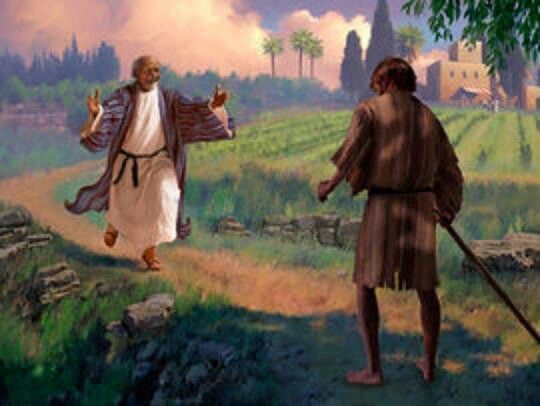
Have you heard of fathers who run? In Jesus’ parable of the prodigal son, the father runs to the son when he sees him walking from a distance. The Bible doesn’t say he stood. Or walked. But ran to the son as soon as he saw him. Why is this important?
Luke 15:20
In Jewish culture, it wasn’t very proper of the men of the households (the head of the families) to run. The parable states that the father pulled up his robes and ran the minute he saw his son at the edge of the village. The father willingly lost his social dignity while pursuing and welcoming his son back home. This was the father who ran.
My father was a father who ran too. Everyday, from the time I started school till I was in 12th grade, he had a principle of One, Two, Three. That his daughters have One glass of milk, Two Dates and Three Badams. And boy, was I a fussy eater. I would finish my breakfast with great difficulty and run out of the door in a hurry. Pappa would calmly walk down with me while I wait for my bus. In the middle of us talking he would stuff a deseeded date into my mouth. The shock on my face that he had this all along! That it was in his hand all along. That he also deseeded it so I could eat it comfortably.
I have memories of him creatively ensuring I eat well. Of him telling stories while feeding. Of him funnily counting to 10 while I drink milk. But mostly, of him taking the playful route instead of scaring me into eating.
By the time I was in 11th, I told him to stop accompanying me to wait for my bus, since I was a little ashamed of others watching me with a parent. In retrospect, I wonder if he felt ashamed at any point, for accompanying me, especially in a culture where fathers being publicly affectionate is not very common.
This always makes me wonder of the verse in Mathew 7:11, if our father on earth can do this much, how much more will our Heavenly Father? How much more does our heavenly father also shamelessly lose His own dignity in pursuit of us returning home?
Oh to have a father who runs after you, not with a stick but with a deseeded date.
Recently, during my quiet time, I came across the widow in 2 Kings 4:1-7. I found myself stepping into her small home and standing beside her. Standing in Her House A nearly empty house. A little olive oil. Two sons. And Elisha’s careful instruction echoing in her ears. “Collect jars from your neighbours. Shut the…
Note to the Reader (Pre-read / Context):November is historically remembered as Reformation Month among mainline Protestant churches worldwide. While it is important to remember the early reformers, especially Martin Luther and his 95 Theses, it is equally important to turn our attention to the Reformation of the East. Cleansing: The Heart of Reformation When I…
Note to the Reader: This piece was originally written for my church youth group’s elocution competition, where I explored the topic “Are traditional gender roles from the Bible present in today’s modern times?” Hi! My topic is: Are traditional gender roles in the Bible present in today’s modern times? Before we dive into gender roles,…
“Religion is like food. But whether you want to use it to feed your neighbour or shove it down their throat is upto you.” Hello there! Welcome back to another part of the Disentangling My Faith series. I truly appreciate how patient so many of you have been as I process and write through much…
Will there be work in heaven? Is it just a white-filtered space with angels singing, or is there more to eternity than endless leisure? Back in college, one of my math professors said, “Dear children, in heaven we’ll be singing and rejoicing all the time. No more math exams!” Although appreciated her intention to comfort…
Greetings to you all in the name of our Lord and Savior, Jesus Christ. I consider this an opportunity to speak to you all from the Word this morning.
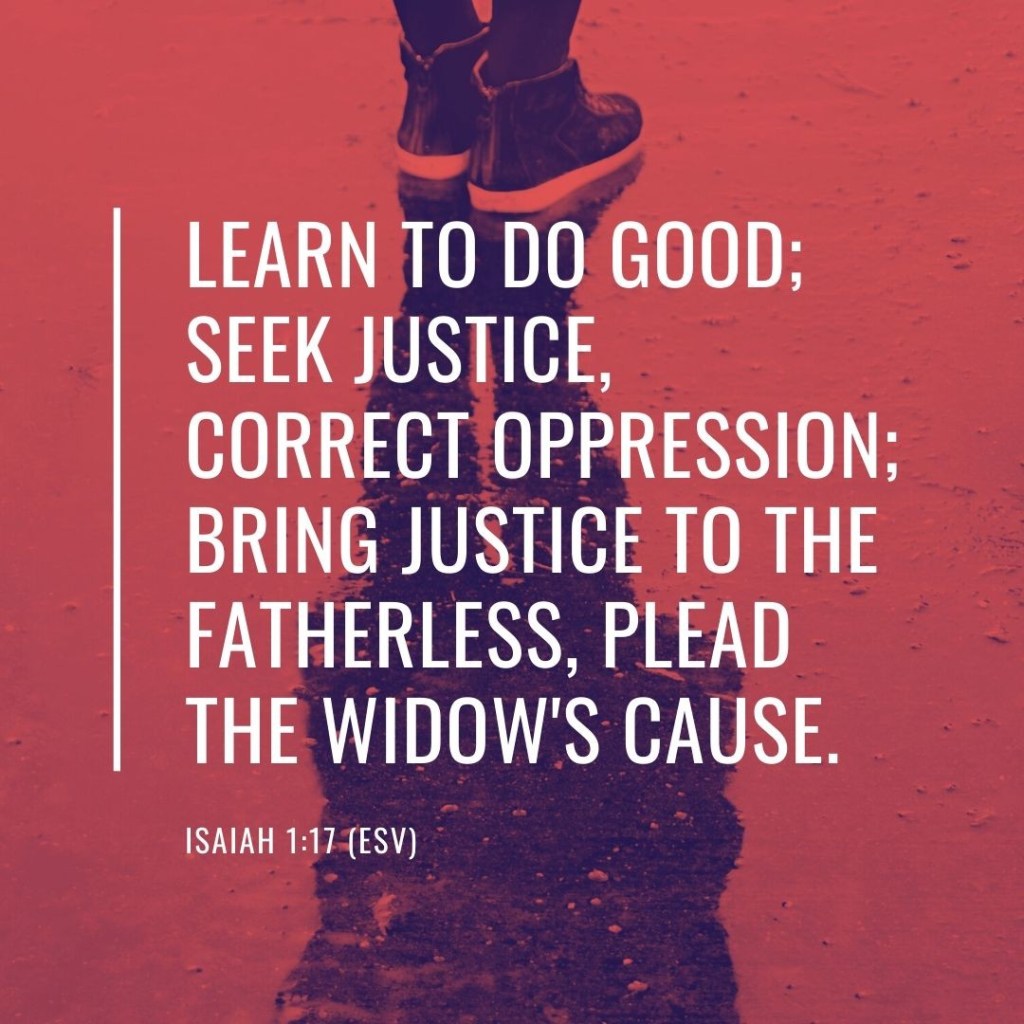
For our meditation today, let us turn our Bibles to Isaiah 1:17.
“Learn to do right; seek justice. Defend the oppressed. Take up the cause of the fatherless; plead the case of the widow.”
Let’s Pray: Dear Lord Jesus, I submit myself into your hands. May the words I speak, proclaim life and may the words from my mouth speak to your people. In Jesus name I pray, Amen.
The Holiness and Sanctity of God
We come every Sunday to worship God. One of the very prominent portions of our liturgy is, “Holy art thou, Oh God”, “Holy art thou Almighty Lord”, “Holy art thou, Immortal Lord”, “Oh Thou that was crucified for us, have mercy on us”. Even as the choir we sing that the Lord is Holy, he is Immortal and he is Almighty. So when we say that God is Holy, what do we mean? Holiness not only implies the purity and sanctity aspects but also the righteousness if God. He is an upright, virteous and righteous God. And when we say that he is a righteous God, we also mean that he is a just God. Holiness and justice go side-by-side with each other. One cannot do without the other.
What is Justice?
So, what is justice? Usually, the desire for justice is something that triggers within you when you feel violated. So when do you feel violated, you may ask?
Well, suppose, you open the newspaper and see the headlines that a girl has been raped/murdered, you may feel a sense of injustice for the girl and her family.
Or when your boss calls you to work during the weekend, you may feel violated that he isn’t respecting your personal time.
Or, it could be something as simple as, you may also feel violated when – suppose you’re standing in a queue and someone barges in and breaks the queue.
So these are all different levels of violation but in some way or the other they may trigger something within you which says, “No, I don’t like the way this situation works. I wish something could be done to change it.” And that is where the seeking of justice comes into play.
Scriptural Examples of Justice
I personally believe that everyone of us in some form or the other, deeply yearn for amendment and correction for justice to prevail. And the Scripture is also full of examples of justice.
We have the example of King Solomon handling injustice when two mothers were fighting over the same baby.
In the book of Acts, we see the early church handle the injustice done to the Greek widows when they were overlooked during the food distribution.
And we also have the famous story of the Good Samaritan, where a Samaritan passes by a wounded Jew and sees that he’s been beaten and robbed and sympathises with the injustice done to him and does whatever he can to help this man recover.
So, this is a recurring theme in the Biblical narrative. It’s not new to any of us. And so I hope even today’s message is a reminder of what we as Christians or what we as image bearers ought to do.
Shiprah and Puah – The Midwives
So, for today’s message, let us look at a passage in the Old Testament where we see two women dealing with the dilemma of justice in their work lives. Can somebody read Exodus 1:15-21?
15 The king of Egypt said to the Hebrew midwives, whose names were Shiphrah and Puah, 16 “When you are helping the Hebrew women during childbirth on the delivery stool, if you see that the baby is a boy, kill him; but if it is a girl, let her live.” 17 The midwives, however, feared God and did not do what the king of Egypt had told them to do; they let the boys live. 18 Then the king of Egypt summoned the midwives and asked them, “Why have you done this? Why have you let the boys live?”
19 The midwives answered Pharaoh, “Hebrew women are not like Egyptian women; they are vigorous and give birth before the midwives arrive.”
20 So God was kind to the midwives and the people increased and became even more numerous. 21 And because the midwives feared God, he gave them families of their own.
Okay, so in this passage we read about the Hebrew midwives, Shiphrah and Puah. Exodus 1:1 onwards, we see that the sons of Jacob went along with their brother, Joseph, to Egypt and settled there and the Lord blessed them, and they were fruitful. And so, after several years, when the new king came -who didn’t know anything about Joseph and the way he administered to Egypt and helped handle the famine and drought in Egypt – he saw that they were fruitful and multiplying in number and this alarmed him.
He thought that there had to be something where he could control the population of the Israelites. So, he goes to the Hebrew midwives and commands them, that when a Hebrew woman gives birth to a female child, let her live, but if it’s a male child, do not let him live.
In regard to the passage we just read, there are three points that I would like to draw your attention to.
1. They were known for their commitment to their profession
The King knew that the Israelite women relied on Shiphrah and Puah for their delivery needs. Their dedication and commitment to their work was so strong that the king thought that by telling these two women alone, the male population, which will be the strength of the nation, will be under control.
So Shiphrah and Puah were excellent in their profession and also had high levels of professional ethics. Speaking of ethics, let me come to my 2nd point.
2. They knew that just because something is legal, it isn’t necessarily ethical
The King had not only allowed them to kill newborn males but commanded them to do so without fail. But it did not sit well with their values, it did not sit well with their principles. They had the discernment in them. They knew that just because the King tells them to do something, it doesn’t automatically make it right. And they used their discernment and let those boys live.
3. They were bold enough to disobey Pharoah
According to the Egyptian rules, disobedience to the orders of a King can lead to imprisonment and/or death without any trial. Now sometimes, the punishment can be extended even to the family members.
Now we read in the scriptures that when the Pharoah questioned them, they said that Hebrew women give birth even before the midwives come, which wasn’t true. If they were caught, by chance, they knew that they would probably lose their lives as well.
But something to be underlined is that, they feared the Lord more than they feared the Pharoah.
What is Holiness?
So, coming back to my question, what is Holiness? Or what is righteousness? It is using your God-given discernment and doing those acts of justice in our profession and in our everyday routine. Let us search the Scriptures to find out verses that talk about justice.
Can somebody read Micah 6:8 for me?
He has shown you, O mortal, what is good. And what does the Lord require of you? To act justly and to love mercy and to walk humbly[a] with your God.
Can someone also read Jeremiah 22:16 for me?
He defended the cause of the poor and needy, and so all went well. Is that not what it means to know me?” declares the LORD.
Is this not what it means to know the Lord? Today when the choir sang, ‘Father, I adore you, I lay my life before you. How I love you.’, the Scripture says that, our expression of love, adoration and worship becomes fulfilled in our acts of justice when somebody under our care is seeking for it. And this is what it means to know God. This is what he Lord requires of us.
So, when we proclaim that the Lord is Holy, when we say that he is righteous we also mean that he is a God of justice. And as image bearers/ imitators of Christ it is our duty as well. Justice isn’t just an act of convenience, but a duty or a burden that we all must take upon in whatever area God has placed us in.
Examples from history: The Quakers & Father Tutu
Before I wind up let me also mention about The Quakers. This is not something that we have learnt in our history text books but a lot of aspects about this particular group has fascinated me. So, the quakers were a group of British men and women, all white all Caucasian, who were against the practice of slavery. So, they were a group of Christian Britishers who were actively part of the anti-slavery movement happening in the 17th and 18th century. And mind you, this is in a time when the Bible was used to justify and propagate slavery.
This was in a time when if you walked into a church the pastor would preach saying ‘Hey! Abraham and many of our patriarchs had slaves. Paul even tells slaves to submit to their masters in Ephesians. So it must be okay to have slaves. It must be in God’s will to own another human being. And who knows, maybe through us God may redeem them.’ This was the normal outlook and narrative being spread during that time.
But the Quakers, were convinced that slavery cannot be Biblical!
They had the discernment to know that Christ-likeness cannot be compatible with owning and exploiting another human being. And so they didn’t let their privilege of being a certain color or a certain race affect what they knew to be right.
There is also the example of Father Desmond Tutu. For those of you who don’t know, Father Tutu was an archbishop of the Anglican church of South Africa, passed away very recently in December 2021 and he is known for his opposition to the apartheid that happened in South Africa. So he stated this and I quote:
“If you are neutral in situations of injustice, you have chosen the side of the oppressor. If an elephant has its foot on the tail of a mouse and you say that you are neutral, the mouse will not appreciate your neutrality.”
Prayer for Social Justice in our Daily Calling
I pray that we all have that kind of discernment in our own walks of life. Today as the choir sang, “Holy Spirit, living breath of God, breathe new life into me”, I pray that the Holy Spirit breathes life into all of us and anoints each one of us to be just, in whatever profession we may be in. As children of God, we are called to exercise this attribute of God and extend justice to those in need.
Our country is also going through a similar kind of turmoil like the one mentioned in Exodus. Our present ruling party has been stirring up fear, has been stirring up division and, I don’t know, but it is probable that in a few years it would not be legal to practice Christianity publicly.
So this is my prayer, that just like Shiphrah and Puah, who were mere midwives and did not have any influence on the King, we as well, in our professions do what is right in the eyes of the Lord.
We are called to perform our little acts of justice in our homes, in our neighborhood and in our professional contexts. I pray that when we say, “God, you are Holy; Oh God, you are righteous”, we remind ourselves that we as children of God need to have the same essence of being righteous- of being just.
And I pray that wherever God leads us and guides us, we always persevere to be righteous in His eyes and in all walks of life. May God bless us all.
Note to the Reader:
On the 22nd of May 2022, I had the priviledge of preaching in the Secunderabad – Hyderabad Mar Thoma Church, formerly known as the St. Andrews Marthoma Church, the very church that I grew up in. The date is important to me because this was around the time that I was re-discovering my faith and finding my calling and purpose alongside understanding Jesus. This was a time when I was struggling to articulate my thoughts on my faith.
But it gives me immense joy that the Lord can use us in phases of our lives where we don’t expect to be of any use. And through this I was able to organise my thoughts on the Calling of Social Justice that people of God are called to. Preparing for a sermon indeed changes you. It transforms you even before it reaches the ears of the audience listening.
Today, almost two years later, I am still reminded of this day and how I let it influence major aspects of my life.
Special thanks to Rev. Saju Chacko Achen for entrusting me with this, my parents who guided me through and of course, my dear church elders, Sunday school teachers, choir members, youth league, Sunday school children and everyone in the congregation for listening.













 The Theologian's Daughter