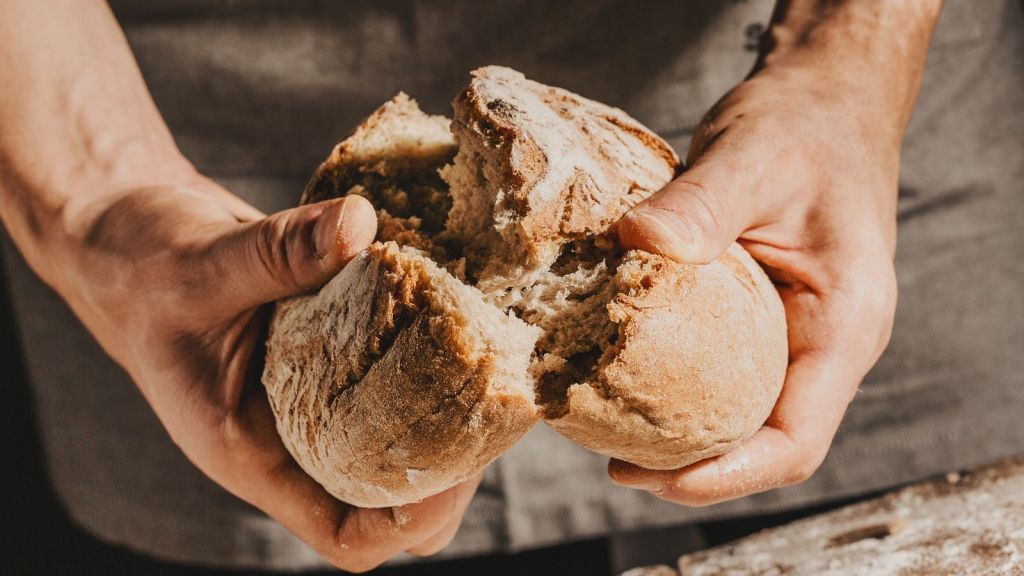
And He took bread, gave thanks and broke it, and gave it to them, saying, ‘This is My body which is given for you; do this in remembrance of Me.’”
— Luke 22:19
A few days ago, I came across a post claiming that the word companionship came from the idea of “breaking bread.” At first, I thought it was a theological stretch—perhaps someone being poetic. But to my surprise, the word companion does, in fact, stem from the Latin roots com (meaning together) and panis (meaning bread). It literally means one who shares bread.
This discovery led me down a new path of reflection.
As someone who loves studying how Holy Communion is practiced across denominations, I’ve spent time drafting comparative charts on the various theological interpretations—Transubstantiation, Consubstantiation, Mystery, and Memorial. But this small etymological revelation made me consider another perspective—one I had previously only touched on: the relational and communal nature of Communion.
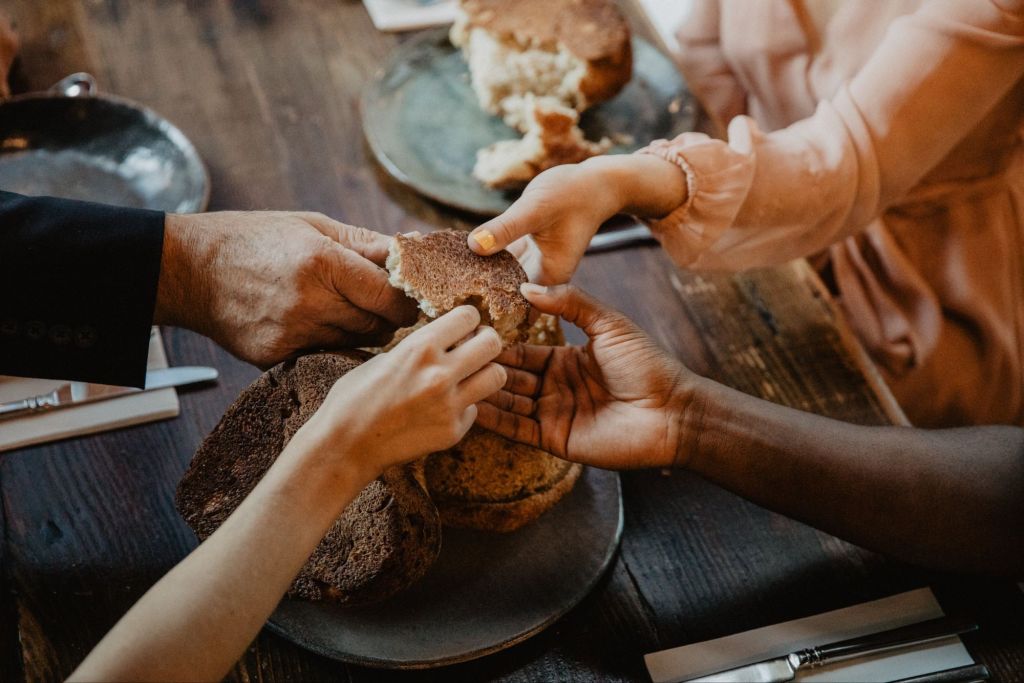
A few years ago, while attending a retreat hosted by a para-church organization, we partook in Communion as was tradition. But that year, the person leading introduced us to something different. First, each of us took the bread and the cup on our own, remembering the sacrifice of Jesus. Then, we were invited to find someone in the room—a friend, a loved one—and offer it to them.
I rose immediately and went to two of my close friends. We broke the bread, shared it, and prayed for one another. In that moment, it felt like something Jesus Himself would have done with His disciples. It wasn’t just a ritual—it was sacred in its simplicity and intimacy.
I’ve found sacredness in community. In the shared laughter over a meal. In the heartfelt prayers whispered over one another. In the very act of being together. And maybe that’s something I overlooked all this time—simply because there wasn’t a full-blown doctrine on it. Or perhaps because no church tradition I knew explicitly named it as such.
Jefferson Bethke, in his book It’s Not What You Think, critiques the commercialization and reduction of Communion that happened through the institutionalization of religion. He compares it to a hypothetical scenario: imagine someone, centuries from now, discovering that Thanksgiving had been reduced to a single slice of turkey and a shot of wine. They’d be confused—because Thanksgiving is a grand meal! And more than the meal, it’s about the gathering of friends you don’t often meet during the rest of the year. It’s about the people, the stories, the laughter, the intimacy.

In many ways, the early church treated the Lord’s Table in a similar manner—a full meal shared in community, wrapped in a newfound love for Jesus.
Of course, over time, as Christianity became more structured and liturgical, practicality led to simplification. But I can’t help feeling that the quiet holiness of friendship, shared meals, and community is just as sacred—sometimes even more—than kneeling on the pew.
As someone who deconstructed her faith and found her way back, Communion was one of those areas I wrestled with deeply. I wasn’t sure where I stood. I wasn’t sure if I found it holy anymore. But today, with the quiet revelation of the word companion, I’ve made peace with it.
Because maybe Communion is found not just in doctrine,
but in the companionship of fellow believers.
Maybe breaking bread together
is the truest act of sharing our love and remembrance of Jesus.
As we draw closer to the end of the Holy Week, may you find a table where you are known, loved and nourished. Amen.
 The Theologian's Daughter
Leave a comment