
Have you heard of the term eco-anxiety? When I first came across the term on an urban dictionary page, I was a little surprised. How could anxiety possibly have an ecological or environmental impact? It sounded almost made up. Eco-anxiety refers to the chronic fear and distress caused by the current state of the environment and the devastating effects of climate change.
This made sense to me. I’ve always found myself being caught between the subject of sustainability. My mind would often feel divided between choices that are environmentally conscious versus choices that are convenient, easy or just practical. In some way or the other, I think all of us have dealt with some level of eco-anxiety at some point in their lives.
However, more often than not, eco-anxiety can sometimes feel overwhelming. Like how can one person undo years of deforestation, pollution, and climate destruction? It’s like staring at an infinite sea of problems while trying to solve them with just one equation.
For someone who has their fair share of what they call “activist guilt” the weight of it often leads to questions: Does it even matter? Is the guilt and responsibility worth it? How much is too much?
In this blog, I will take you through a series of my own eco-anxiety and how I came in terms with it. I hope you find it relatable and, perhaps, find solace in navigating your own journey with eco-anxiety.
1. The Plastic Bottle
Every time I see a single-use plastic bottle (or cup, straw, plate for that matter) I weigh how thirsty I am to really consume it.
Because even if it’s one bottle it’s a lot in the long run. But I’m also aware that Sustainability is people first. So do I drink or not?
How thirsty am I? Can I hold it until I get home? Can I prevent this by drinking a lot of water before stepping out of the house? And carry some?
Maybe I’ll drink this one time because I’m really thirsty.
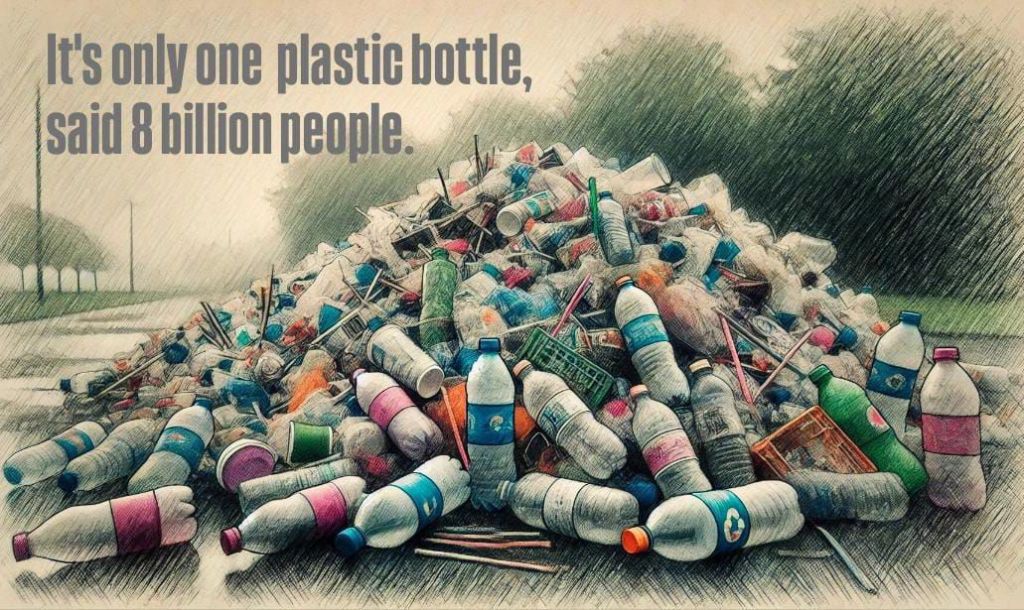
My mind constantly races back and forth in support of the bottle versus hydrating. The debate is not just about the plastic bottle—it’s symbolic of the larger battle between living sustainably and navigating the practicalities of the urban life.
2. The Diet
Over the years, I’ve also been informed of how diet can play a vital role in my overall carbon footprint, and have consciously cut down on my meat consumption, especially red meat. It’s a small attempt to lower my carbon footprint, but it doesn’t always feel impactful.

Being a Malayalee Christian adds an extra layer of awkwardness to these choices, especially during family gatherings when meals are laden with meat dishes. Often this brings me to the question of does this small change of mine really affect the overall carbon emissions produce by hyper urban individuals like me on a daily basis?
At times, my small dietary sacrifices feel like pouring a glass of water on a house fire. Which brings me to a more fundamental question: How much individual responsibility is too much?
3. Individuals Vs Corporations
The more I think about sustainability, the clearer it becomes that individual actions, while important, are terribly insignificant as compared to the damage caused by corporations and industries. We think twice before using a plastic bottle/cup/straw while billionaires board private jets. It feels unfair that the burden of “saving the planet” falls on individuals when the scale of corporate impact is exponentially larger.

To be fair, individuals have been receiving the blame and being burdened with the responsibility of sustainability disproportionately more than those in power. Of course individual actions are important but would you blame the guy who had one glass of water for not pouring enough or the guy who had the whole system of the hosepipe and refused to open it in the first place simply because he wanted the hosepipe to himself? When do we recognise the unfair share of responsibility?
This led me to years of frustration that kept growing until I realised..
4. Saving the Planet includes saving myself
In the midst of this, I’ve realized something I often overlook: saving the environment also means saving myself. It means recognizing that I am part of the ecosystem I’m trying to protect. Drowning in guilt over a plastic bottle or a meat dish isn’t sustainable either—mentally, emotionally, or physically.
Although this in no way means that one shouldn’t have the passion to save the planet I think gentle reminders of self-preserverence are equally necessary. Sustainability must include mental and emotional well-being, or it defeats its purpose entirely.
Being kind to myself is just as important as being kind to the planet.
5. Realizing I’m Not Alone
Eco-anxiety is quite rampant among people my age is something I realised when I converse with my friend groups. However, I was not prepared for it being common among younger kids. Recently, when I was talking to a group of kids and the topic veered towards nature and marine life I was a little surprised that many of them expressed sadness over extinct animals. It was overwhelming to see such young minds burdened by this reality.
Research confirms that eco-anxiety is increasingly common among younger generations, including teenagers and children. This made me realise that the eco-anxiety and activist guilt that runs in me is not a singular instance but an increasing phenomenon, especially among younger people.
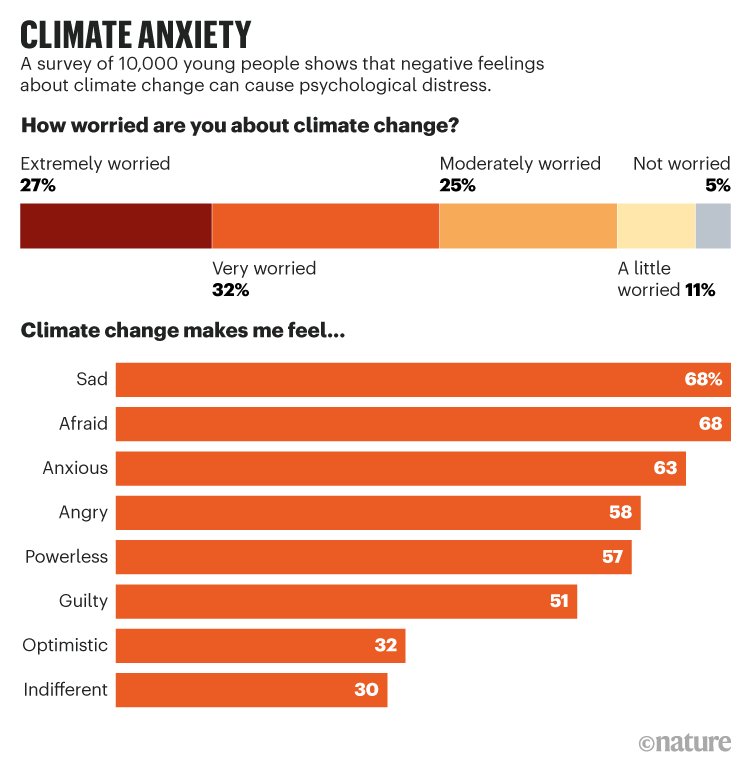
This was both painful to process and a stark reminder of the urgency of the situation. It made me realize that sustainability isn’t about perfection—it’s about collective, consistent effort.
6. LT Jeyachandran’s Approach
What really helped me were the words of LT Jeyachandran when it came to navigating and channelising my own feelings regarding the climate crisis. I find it very rare to see theologians who view climate change not just from an ethical lens but also from the lens of a spiritual responsibility.
While a lot of Christian preachers openly mocked the credibility of global warming (something my scientific temper couldn’t handle) or spiritualize it without action, his approach reminded me of the reason we are called to protect the planet -stewardship. He critiques both extremes: worshipping the environment and dismissing climate concerns. Instead, he emphasizes the responsibility to care for creation as one of the spiritual duties that cannot be compromised on.
This perspective has helped me channel my eco-anxiety in constructive ways. Much like anger can be channeled into fighting injustice, eco-anxiety can fuel efforts to address environmental challenges. Jeyachandran’s teachings offered a balanced and hopeful perspective. This healed me in more ways than I could’ve ever imagined.
Final Thoughts
I realise that eco-anxiety is useful and necessary to take action, too much of it can be paralyzing. And if I need to take care of myself, I need to understand my own limitations without feeling too guilty.
Eco-anxiety is real and valid, but it doesn’t have to envelope me in guikt. Small steps, done with intention, matter. Whether it’s skipping a plastic bottle, eating less meat, or simply being mindful, every action counts.
And sometimes, the most sustainable thing we can do is extend grace—to the planet, to each other, and to ourselves.
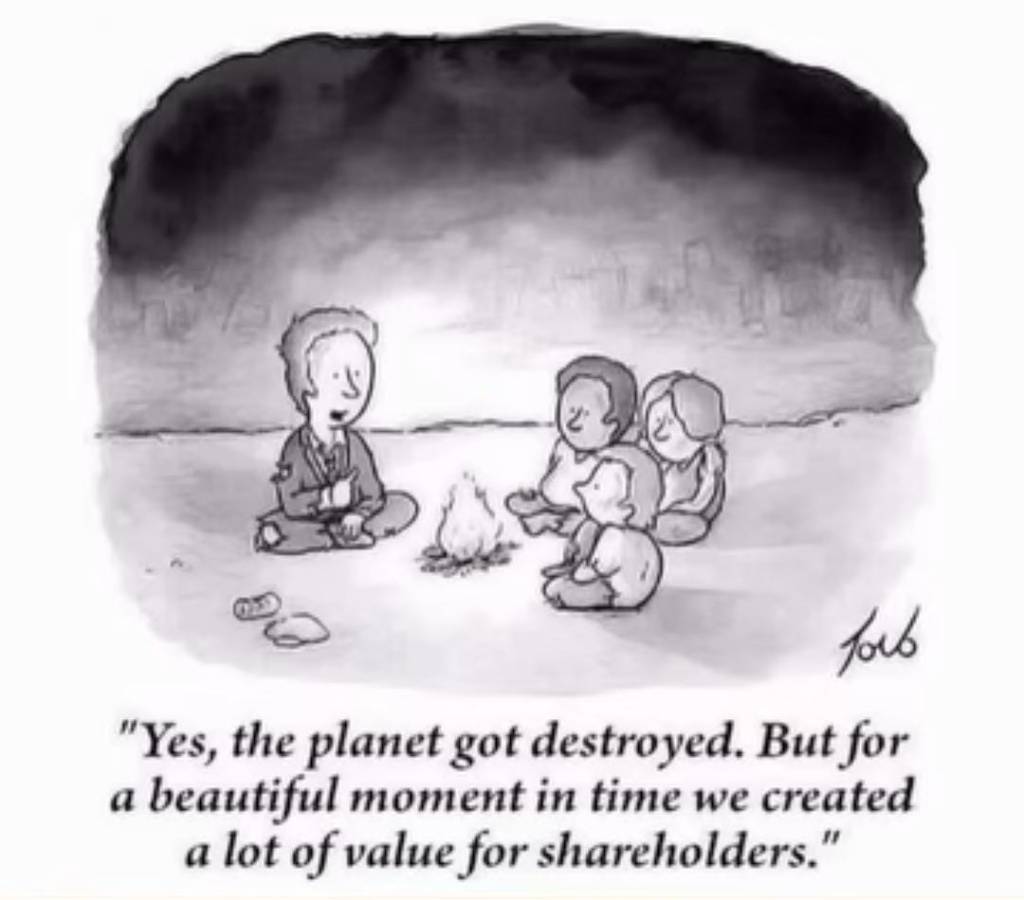
On a serious note, I hope this is not the future.
If you’ve experienced eco-anxiety or activist guilt, I hope this blog reminds you that you’re not alone. We’re in this together, striving for progress, not perfection.
Thank you for traveling with me through my very eco-anxious journey!
 The Theologian's Daughter
Leave a comment